NASA's Voyager 1 launched second, so how did it beat Voyager 2 to a light-day by nearly a decade?
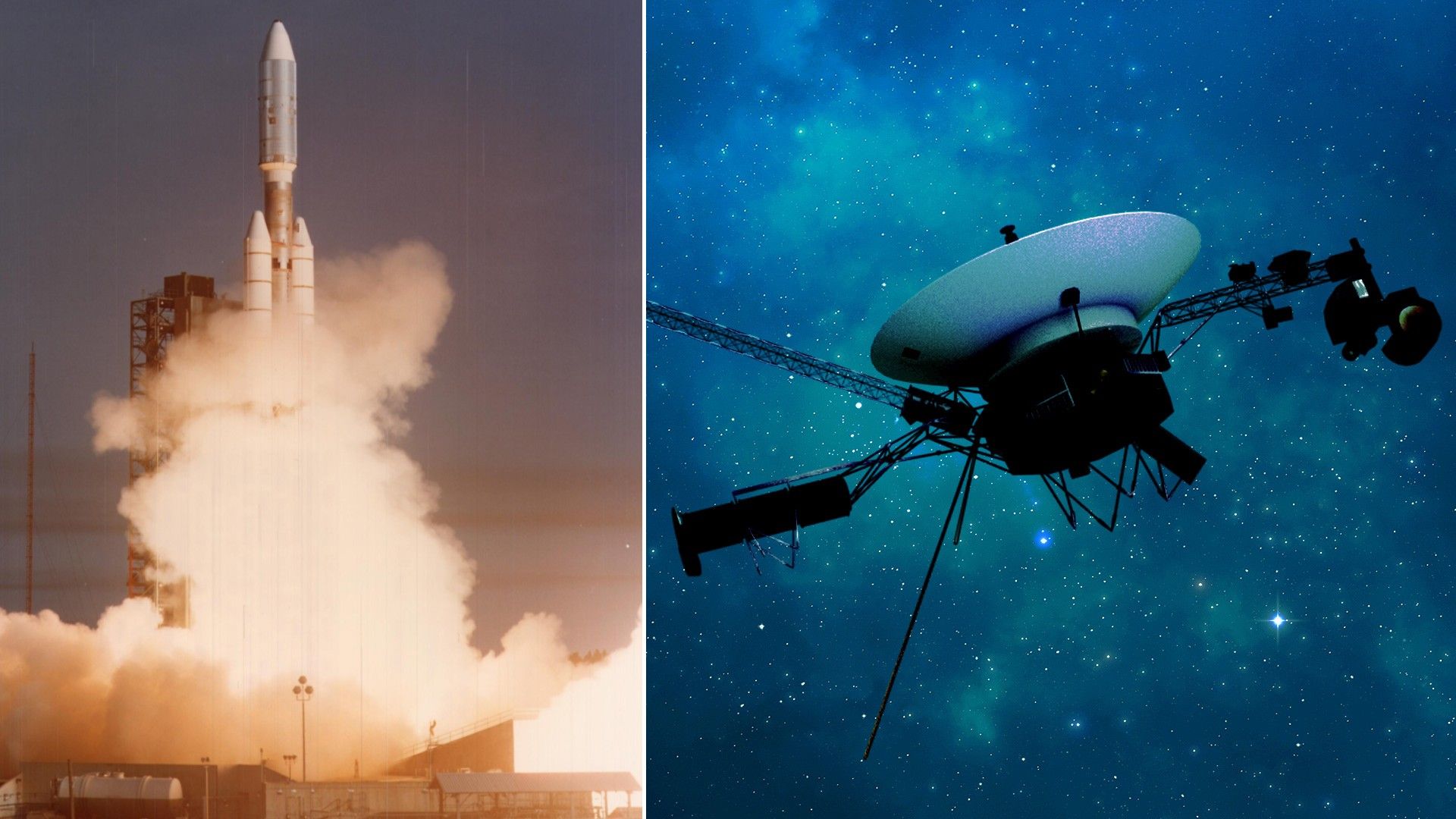
Image: Space.com
Machine-written summary, checked against the sources below
Launched in 1977, NASA's Voyager 1 has now traveled roughly one light-day from Earth, continuing to send signals home after 49 years as it crosses the solar system's outer edge. Voyager 2, despite launching earlier, is not expected to reach that same distance until 2035, a gap tied to differing speeds chosen for the two spacecraft over their missions.
Voyager 1 just reached a light-day in space, but Voyager 2 won't do the same until 2035, due to speed choices made throughout their 50-year missions.
Summary by Space.com
Read the full story at Space.com